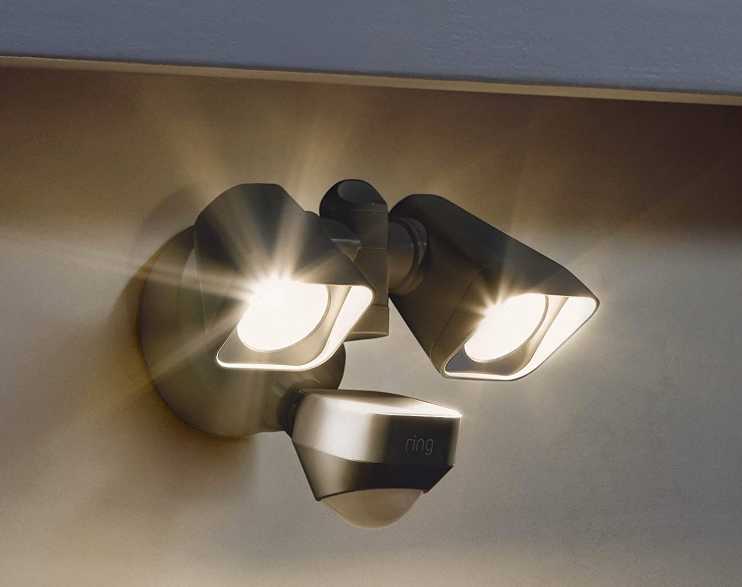
A Step-by-Step Playbook for Ring Smart Lighting and Camera Lights (Spotlight/Floodlight)
Your Ring lights are a critical component of your home’s layered security. They illuminate dark pathways, deter potential intruders with motion-activated brightness, and work in concert with your cameras to ensure a clear view of your property at night. So, when a light suddenly fails to turn on, it’s more than an annoyance—it’s a breach in your security perimeter.
If your Ring light is unresponsive, don’t panic. The cause is almost always a simple and fixable issue related to power, network connectivity, or a misconfigured setting in the Ring app.
The first and most critical step in solving this problem is to correctly identify which type of “Ring light” you are troubleshooting. The causes and solutions are completely different for Ring’s two distinct product lines. Are you fixing a standalone Ring Smart Light (like a Pathlight, Steplight, or a battery-powered Spotlight) or the integrated light on a Ring Security Camera (like a Spotlight Cam or Floodlight Cam)?
This definitive guide will serve as your expert troubleshooter. We will provide a clear, step-by-step diagnostic guide for both product lines, helping you pinpoint the exact cause of the failure and apply the correct fix to bring your lights back online.
Path A: Troubleshooting Standalone Ring Smart Lighting (Pathlights, Steplights, Spotlights)
This path is for Ring’s separate, battery-powered smart lights. These are the lights that do not have a camera built into them.
The Foundation: How Ring Smart Lighting Works
It is essential to understand that these standalone lights do not connect to your home’s Wi-Fi network. They use a proprietary, long-range radio protocol to communicate with a central hub called the Ring Bridge. The Ring Bridge is the device that plugs into an indoor outlet and connects to your Wi-Fi router. If the Bridge is offline or if the light cannot communicate with the Bridge, it will not function.
The Troubleshooting Flowchart for Smart Lighting
Step 1: Check the Power – The Batteries (The #1 Cause)
This is, by far, the most common reason a standalone Ring Smart Light will stop working.
- Open the Ring app and navigate to your light’s device page. Check the battery level.
- If the battery is low or dead, replace it. The type of battery is crucial and varies by device:
- Ring Pathlights and Spotlights require four (4) D-cell batteries.
- Ring Steplights require three (3) C-cell batteries.
- Expert Tip: Always use high-quality, standard alkaline batteries. Do not use rechargeable batteries, as their voltage characteristics can cause performance issues.
Step 2: Check the Hub – The Ring Bridge
If the batteries are fresh but the light is still offline or unresponsive, the problem is likely with the Ring Bridge.
- Check the Status Light: Go to your Ring Bridge. There is a small, circular blue status light on the front.
- Solid Blue: The Bridge is online and working correctly.
- Flashing Blue: The Bridge is trying to connect to your Wi-Fi network.
- No Light: The Bridge has no power. Check that it is securely plugged into the wall outlet.
- Reboot the Bridge: If the light is flashing or you are having issues, unplug the Ring Bridge from the wall, wait 30 seconds, and plug it back in. Give it a few minutes to fully reboot and reconnect to your network.
Step 3: Check the Connection – Signal Strength
Even with a long-range radio, the signal between the light and the Bridge can be blocked by thick walls, metal siding, or excessive distance.
- In the Ring app, navigate to your light and tap on Device Health.
- Look for “Signal Strength.” Just like with Ring’s cameras, you will see an RSSI value. A value closer to zero is better.
- If the signal is weak or very poor, you may need to move the Ring Bridge to a more central location in your home, closer to the problematic light.
Step 4: Check the Settings in the Ring App
- Light Schedules: Go to the light’s settings and check if you have inadvertently set a Light Schedule that is preventing the light from turning on at certain times.
- Light Groups: Ring Smart Lights are most powerful when grouped together. Go to the group settings and ensure that motion detection for that group is enabled and that the problematic light is included in the correct group.
Path B: Troubleshooting Integrated Camera Lights (Spotlight Cam & Floodlight Cam)
This path is for the lights that are built directly into a Ring Security Camera. These lights are controlled directly through the camera’s own Wi-Fi connection and do not use the Ring Bridge.
The Troubleshooting Flowchart for Camera Lights
Step 1: Check the Power Source
A camera’s lights will not turn on if the camera itself has no power.
- For Battery Models (e.g., Spotlight Cam Battery, Spotlight Cam Solar):
- Open the Ring app and check the battery percentage in the Device Health screen.
- If the battery is low, remove the Quick Release Battery Pack and fully charge it using a micro-USB cable.
- Ensure the charged battery is securely clicked back into the camera’s compartment.
- For Wired/Plug-in Models (e.g., Floodlight Cam, Spotlight Cam Pro Plug-in):
- Go to your home’s circuit breaker panel and check to see if the breaker that controls the camera’s circuit has been tripped. If it is, flip it fully off and then back on.
- For plug-in models, ensure the power adapter is securely plugged into a working outlet.
Step 2: Check the Network – The Wi-Fi Connection
The light functions are controlled via Wi-Fi. If the camera is offline, the lights will not work.
- In the Ring app, go to the camera’s Device Health screen.
- Check the Network > Signal Strength. You need a strong RSSI value (ideally better than -60) for reliable operation.
- If the signal is weak, your camera will struggle to receive commands. You must improve the Wi-Fi signal at the camera’s location. The best solutions are:
- Moving your router to a more central location.
- Installing a Ring Chime Pro, which acts as a dedicated Wi-Fi extender for your Ring devices.
- Upgrading your home network to a mesh Wi-Fi system.
Step 3: A Deep Dive into the In-App Light Settings
This is the most common cause of a non-responsive camera light when power and Wi-Fi are good.
- The Manual Light Toggle: On your camera’s main device dashboard in the app, there is a simple “Lights” toggle button. Ensure this is turned on.
- Motion-Activated Lights Settings:
- Go to Device Settings > Light Settings.
- Ensure the “Motion-Activated Lights” toggle is turned on.
- Motion Zones for Lights: This is a critical and often overlooked setting. Your camera has separate and distinct motion zones for the camera and for the lights.
- In the Light Settings menu, tap on “Motion Zones for Lights.”
- Make sure you have drawn one or more active zones where you want the lights to be triggered by motion. It is very common for users to accidentally disable all the light zones, which will prevent the lights from ever turning on automatically.
- Light Scheduling: Check the Light Settings menu for any Light Schedules. You may have inadvertently created a schedule that is telling the lights to stay off during certain hours.
Step 4: The Full Device Reboot
If settings, power, and Wi-Fi all look good, the final step is to reboot the camera itself.
- For Battery Models: Simply remove the battery pack, wait 30 seconds, and re-insert it.
- For Hardwired Models: Go to your circuit breaker, flip the breaker for that circuit off, wait 30 seconds, and flip it back on.
Advanced Troubleshooting and Common Scenarios
- The “Group” Glitch: If a light is part of a group and is misbehaving, a common fix is to go into the group’s settings in the app, remove the problematic light, save the group, and then re-add the light to the group.
- The “Auto Shut Off Timer”: In the Light Settings, there is an “Auto Shut Off Timer” that determines how long the light stays on after being triggered by motion. If this is set to a very short duration (e.g., 30 seconds), it may appear as though the light is not working correctly.
- Environmental Factors: Is another bright, constant light source (like a neighbor’s porch light) aimed at your Ring device? A very bright light can sometimes trick the device’s ambient light sensor into thinking it’s still daytime, which would prevent the motion-activated lights from turning on at night.
Frequently Asked Questions (FAQ) about Ring Lights
1. What kind of batteries do the standalone Ring Smart Lights use? It varies by model. The Pathlights and Spotlights use four D-cell batteries. The Steplights use three C-cell batteries. The Floodlight Battery uses four D-cell batteries.
2. Can I use a Ring Smart Light (like a Pathlight) without owning a Ring Bridge? No. The Ring Bridge is the essential hub that connects the standalone Smart Lighting products to your Wi-Fi network and the Ring app. They cannot function without it.
3. Why are the lights on my Ring Floodlight Cam flashing on and off? This often indicates a problem with the power supply. It could be due to faulty wiring, an incompatible dimmer switch on the circuit, or an internal hardware failure. You should turn off the power at the breaker and contact an electrician or Ring Support.
4. Can I replace the LED bulbs in my Ring Floodlight Cam or Spotlight Cam? No. The LED light arrays in Ring’s camera products are fully integrated and are not designed to be user-replaceable.
5. How can I make the lights on my battery-powered Spotlight Cam stay on for longer? In the app’s Light Settings > Auto Shut Off Timer, you can adjust the duration. However, be aware that setting the lights to stay on for a longer period will cause the camera’s battery to drain significantly faster.
The Final Verdict: A Logical Path to Illumination
A Ring light that refuses to turn on is a frustrating but highly solvable problem. The key to a quick and effective solution is to first correctly identify your product type—is it a standalone, battery-powered Smart Light that relies on the Ring Bridge, or is it an integrated Camera Light that relies on the camera’s own power and Wi-Fi connection?
Once you’ve identified your path, the troubleshooting process is a logical funnel. For standalone Smart Lights, the problem is almost always dead batteries or a communication issue with the Ring Bridge. For integrated Camera Lights, the problem is almost always related to the camera’s primary power source (battery or wired), its Wi-Fi connection, or a misconfigured light setting within the Ring app.
By methodically working through this diagnostic guide, you can move from the darkness of confusion to the clarity of a solution, ensuring your Ring lights are always powered, connected, and ready to illuminate your property and enhance your home’s security.
Learn more about Smart Security
